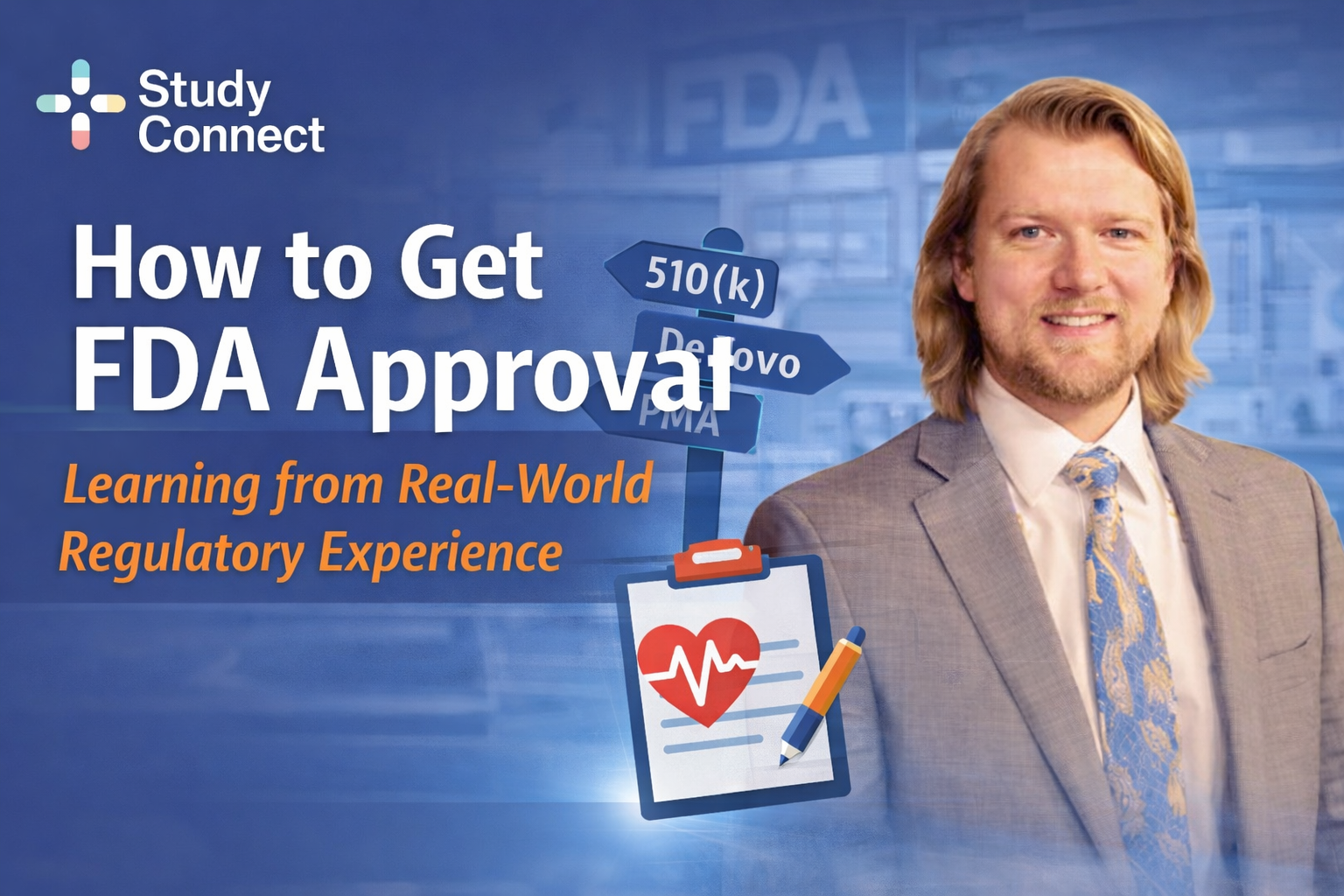
How to Get FDA Approval: Learning from Real-World Regulatory Experience
“How to get FDA approval” is one of the most searched questions in the medical and health innovation space and for good reason. For many founders, understanding the FDA approval process for medical devices is the difference between a product that reaches patients and one that gets delayed for years. For medical device and health technology companies, FDA approval is not just a regulatory milestone, it’s the gateway to market access, investor confidence, and long-term credibility.Yet, despite its importance, the FDA process is often misunderstood. Many companies approach it too late, treat it as paperwork, or rely on fragmented advice that doesn’t reflect how approvals actually happen in the real world. The reality is that FDA approval for startups requires early planning, clinical validation, and a clear regulatory strategy- not just documentation at the end.
Meet Matthew I. Mace:
Experience That Goes Beyond Theory
Matthew I. Mace is a seasoned medical technology and cardiovascular expert with more than 15 years of experience working across regulatory strategy, clinical development, and commercialization. His career spans both invasive and non-invasive cardiovascular technologies, giving him a rare, end-to-end view of how medical innovations move from concept to clinical adoption.
Over the years, Matthew has held leadership roles at globally recognized medical companies and startups, working at the intersection of science, regulation, and execution. Most recently, he was appointed to the Board of Directors at Precision Cardiovascular, where he provides clinical, regulatory, and quality systems leadership as the company advances toward clinical trials.
Read More : https://uk.advfn.com/stock-market/share-news/Precision-Cardiovascular-Appoints-Matthew-I-Mace
What sets Matthew apart is not just regulatory knowledge - but the ability to apply it practically, early, and strategically.
Real FDA Experience:
From Breakthrough Designation to Global Trials
As Chief Scientific Officer and Co-Founder of Acorai, Matthew played a key role in securing an FDA Breakthrough Device Designation for an ML-driven intracardiac pressure monitoring technology. This designation is reserved for technologies that have the potential to provide more effective treatment or diagnosis of life-threatening conditions—and it significantly accelerates FDA interaction and review timelines.Under his leadership, Acorai raised more than $17 million in funding and launched a global clinical trial involving approximately 1,600 patients across six countries. These outcomes were not accidental. They were the result of early regulatory alignment, strong clinical rationale, and clear evidence generation - long before final submissions.This kind of experience matters. FDA approval is rarely about a single document. It’s about understanding how regulators think, what evidence they expect, and how to build a story that is scientifically sound and clinically relevant.

Why FDA Approval Starts Earlier Than Most Companies Think
Choosing the right FDA regulatory pathway - whether 510(k), De Novo, or PMA - is one of the most important early decisions medical device companies make.
A common mistake among early-stage medical companies is assuming that FDA approval begins once the product is finished. In practice, regulatory success starts much earlier - often before a single line of code is written or a device prototype is finalized. A strong FDA submission process is built over months of evidence generation, clinical feedback, and regulatory alignment—not rushed in the final weeks.
Key questions need answering early:
- Is the clinical problem well-defined and validated?
- Does the proposed solution address a real unmet need?
- What regulatory pathway makes sense for this product?
- What evidence will regulators expect at each stage?
When these questions are ignored early on, companies often face costly delays, rework, or failed submissions later. Matthew’s work consistently reflects a different approach: align regulatory strategy, clinical validation, and development from the very beginning.
Successful FDA regulatory strategy for medical devices combines strong clinical evidence, quality systems, and expert guidance from professionals who have done it before.
Scaling Regulatory Expertise Through Collaboration
Today, Matthew is expanding his focus beyond individual projects to help more companies access regulatory expertise at scale. The challenge he is addressing is a familiar one: most medical companies cannot afford large in-house regulatory teams early, yet they cannot afford to get regulatory strategy wrong. At the same time, modern medical innovation increasingly depends on early clinical insight feedback from researchers, clinicians, and trial experts who understand real-world practice.
StudyConnect connects medical companies with a global network of verified researchers across specialties, enabling early validation, expert interviews, and structured clinical feedback. Combined with AI-powered research tools, companies can validate ideas, understand clinical expectations, and generate evidence long before formal trials begin. When regulatory leadership and global research access come together, FDA readiness becomes proactive rather than reactive.
Building Smarter FDA Pathways
The future of FDA success is not about moving faster blindly , it’s about moving smarter. Companies that combine regulatory experience, clinical validation, and early expert engagement consistently outperform those that treat approval as an afterthought.
If you’re a medical company asking how to get FDA approval, the answer often starts with the people you involve and the decisions you make early.
Learning from professionals like Matthew I. Mace—and engaging with global research communities—can significantly change the trajectory of your product.
Get Involved
If you are a researcher, clinician, or trial expert and want to contribute your expertise to shaping the next generation of medical innovation, you can join StudyConnect as a researcher and collaborate with companies worldwide. If you are a medical company or founder looking for regulatory guidance, you can book a consultation with Matthew I. Mace to explore regulatory strategy, FDA pathways, and early-stage decision-making. FDA approval doesn’t begin at submission - it begins with the right conversations, the right validation, and the right expertise.
If you’re building a medical device and want to move faster, early clinical validation is critical. StudyConnect helps companies conduct early user research for medical devices by connecting them with verified researchers and clinicians worldwide—before major development or regulatory spend. If you want to interview experts, validate clinical need, or generate evidence early, reach out to us at support@studyconnect.org.
Read More on How to get FDA approval